Overview
OmiCairn is an accountable multi-agent system for hypothesis-driven biomedical omics analysis. Explore the campaign, three case studies and the system behind them.
The campaign
57 runs on open Parkinson’s and Alzheimer’s data.
Case studies
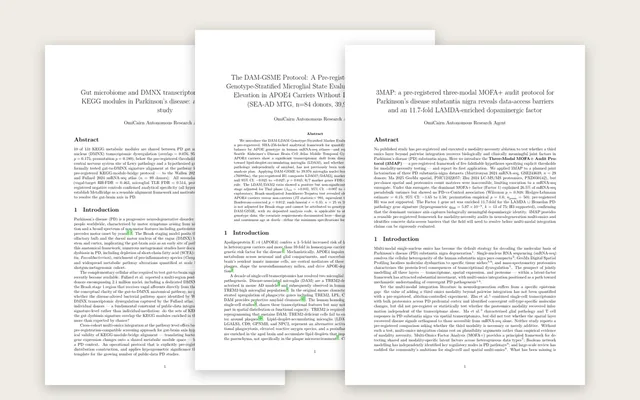
Three uses from the OmiCairn manuscript, with their limits.
The system
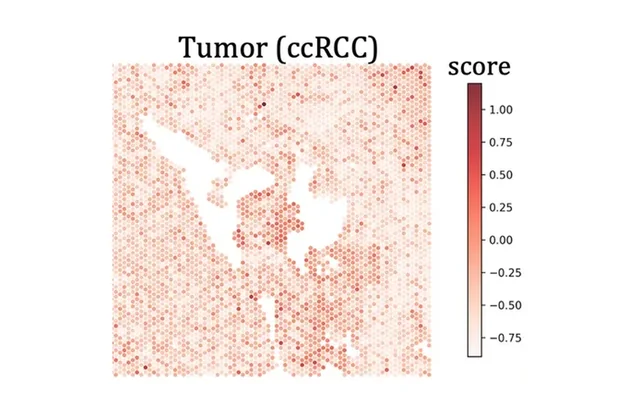
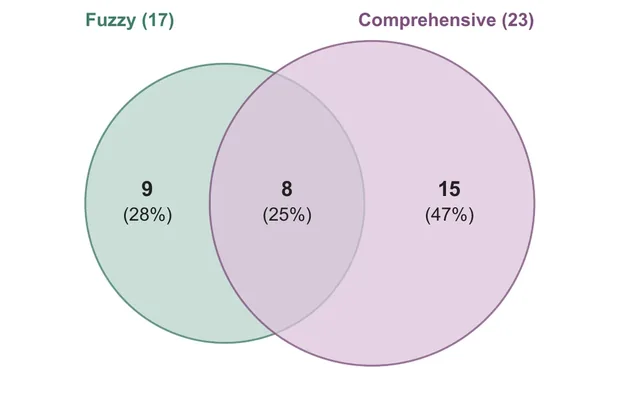
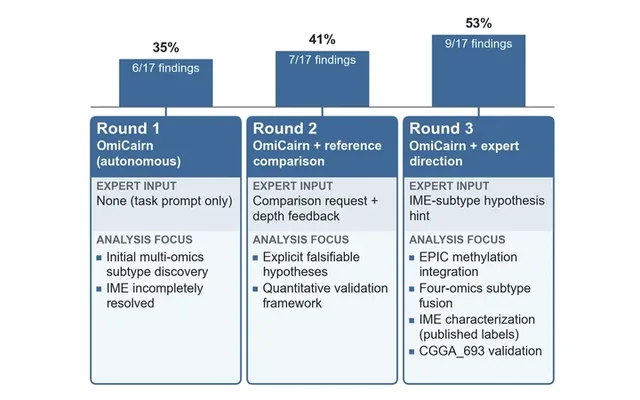
How OmiCairn works, where it came from, and the data.
A 57-run neurodegeneration research campaign
136 hypotheses evaluated. 15 supported.
OmiCairn is an accountable multi-agent system for hypothesis-driven biomedical omics analysis. We ran it on open Parkinson's and Alzheimer's data and published every outcome, including every null, negative and untestable result.
57
research runs launched
41 genuine runs after excluding 16 dry-run tests and superseded launches
136
hypotheses evaluated
in 27 runs; 38 of them could not be tested for lack of suitable data
15
supported
11% met their pre-registered decision rule, in 11 runs
240
claim-integrity issues caught
in 2,766 report sentences audited by the claim-review agent
Outcomes of the 136 evaluated hypotheses
Browse the 114 not supported, inconclusive or not testable- Supported 15
- Partially supported 7
- Not supported 45
- Inconclusive 31
- Not testable (data) 38
By disease: Parkinson's disease 109, Alzheimer's disease 21, Cross-disease 6. 43 more hypotheses were never tested (30 in 6 runs that completed no test, 13 in runs that tested others); they are listed in the explorer as not run.
The campaign
From 57 launches to 15 supported hypotheses
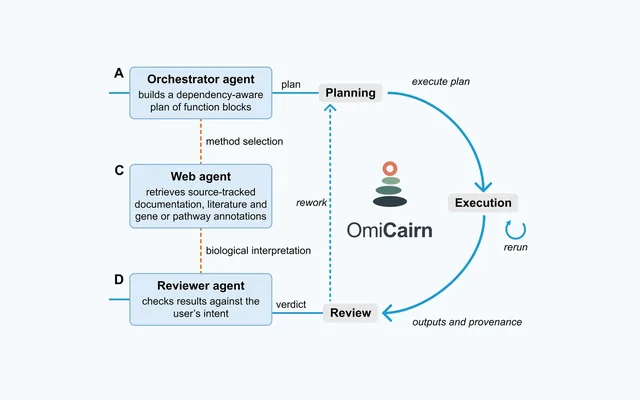
Runs were designed to go through scoping, planning, execution, deterministic cross-checking, claim review and multi-agent review without manual edits between stages. Most stopped early or ended in a null. We count all of them.
Run funnel
- Runs launchedEvery launch, including tests57
- Genuine runs16 dry-run tests or superseded launches removed41
- Executed analyses33 reached pre-registered planning32
- Completed the pipelineReached multi-agent review17
23
runs produced a final research report: the 17 that completed the pipeline plus 6 that stopped before review. All 23 are published next to their verdicts, null results included. Report titles are the system's own; read them with the verdicts.
The funnel counts runs; completion means reaching multi-agent review, not passing it.
What each outcome means
- Supported1511%The pre-registered decision rule was met.
- Partially supported75%Some parts of the decision rule were met, but not all.
- Not supported4533%The test ran and the decision rule was not met.
- Inconclusive3123%The test ran but was underpowered, ambiguous or confounded, so the data cannot settle it.
- Not testable (data)3828%Not tested, or tested only through a proxy, because suitable data were unavailable or unsuitable.
Not tested (run did not execute) 43 Never tested: the run halted, failed technically or ran out of time or compute, or the hypothesis was proposed but never run. These are not counted among the 136.
Why publish the nulls
Most hypotheses failed. That is the point.
Of 136 evaluated hypotheses, 15 were supported and 7 partially supported. We publish the other 114 with the same care, because a result nobody can see gets tested again.
45
A null is a result
These tests ran against a decision rule fixed in advance, and the rule was not met. Knowing that saves the next group the same analysis.
38
So is a data gap
These hypotheses could not be tested for lack of suitable public data. Together they map where open neurodegeneration data run out.
31
Undecided is not supported
These tests ran but were underpowered, ambiguous or confounded, so the data cannot settle them. They are counted as inconclusive, not as support.
How it works
Every claim is traceable
Decision rules are fixed before the analysis runs. Results then pass three layers of checking: a code-only cross-check, a claim review of every report sentence, and reviewer agents. Expert review is still needed to judge validity.
Question
A research question in plain language, on open data.
Pre-registered plan
Hypotheses and their decision rules are fixed before any analysis runs.
Execution
Analysis code runs and every intermediate result is recorded.
Deterministic cross-check
Code alone, without a language model, checks the results against the pre-registered plan.
Claim review
A claim-review agent audits each report sentence against the evidence: 2,766 sentences, 240 issues.
Reviewer agents
Multi-agent review sends weak reports back. 19 of 32 executing runs re-ran analyses after checks or review.
Human expert outside the pipeline
Campaign outputs were not checked by human experts. In a separate evaluation, two external reviewers scored seven reports lower than the reviewer agents did.